
Beekeeping Project
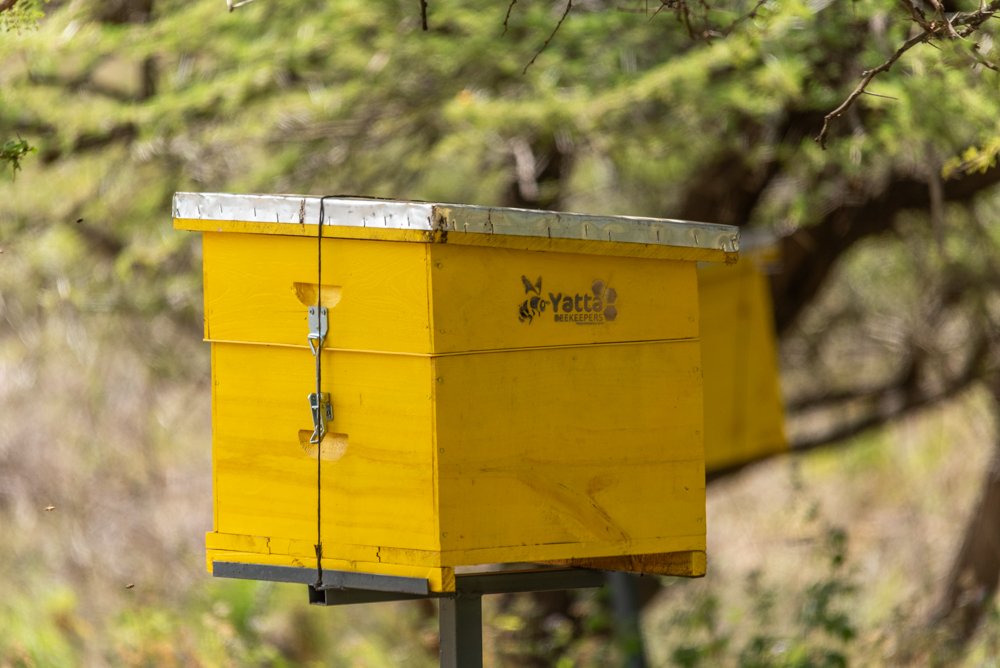
It starts with something as simple as a wooden box and a swarm of bees.
Bees don't ask for much, but they give back enormously. As they move from flower to flower, they pollinate the wild olive forests, acacia stands and wildflower plains that hold this whole ecosystem together. Work so quiet it's easy to miss and so essential that almost nothing here would grow without it.
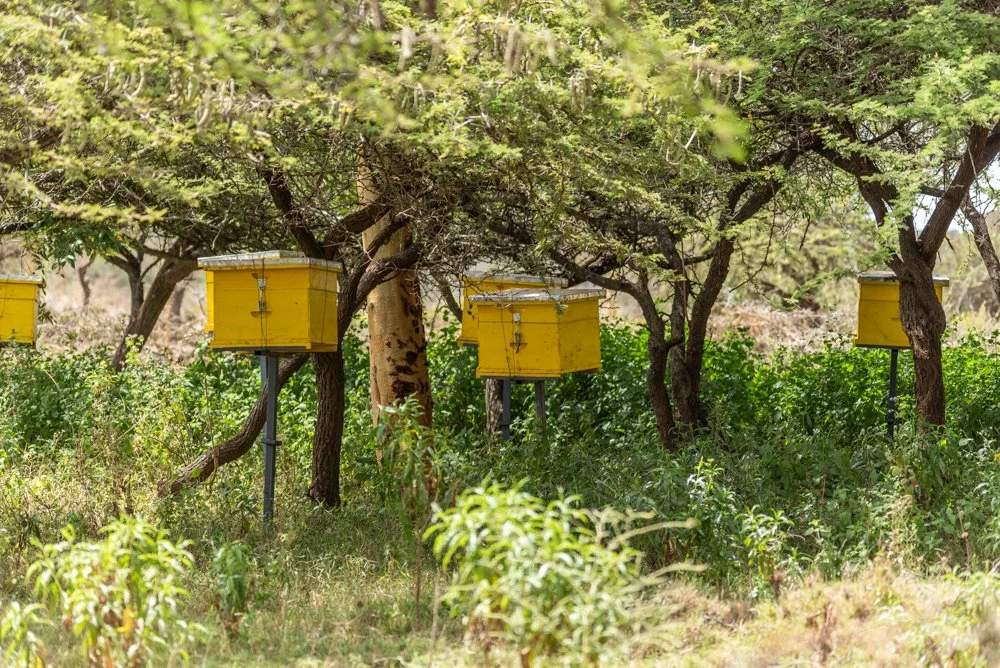
Beyond Mugie's fences, bees do something else too. Elephants, it turns out, have a healthy respect for an angry hive. Beehives placed along the edges of community farms have become gentle, living fences helping to deter raiding elephants and easing one of the oldest tensions between people and wildlife on this landscape.
What began as a pilot community project of just 20 hives in 2023, led by local Pokot women and supported through Ekorian's Mugie Camp, The Moyo Foundation and conservation partners, has grown steadily into something much bigger.
128 hives across 8 apiary sites
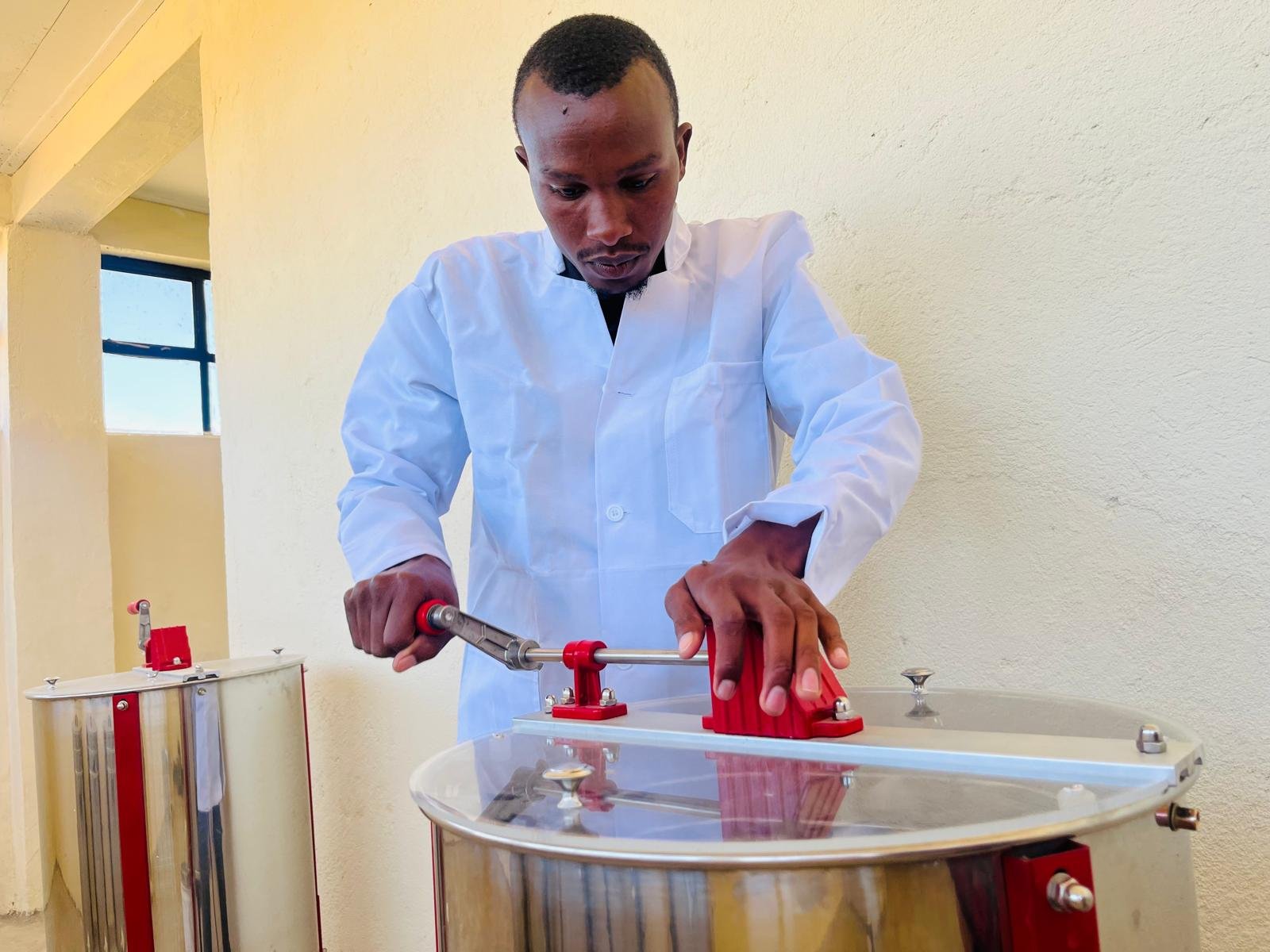
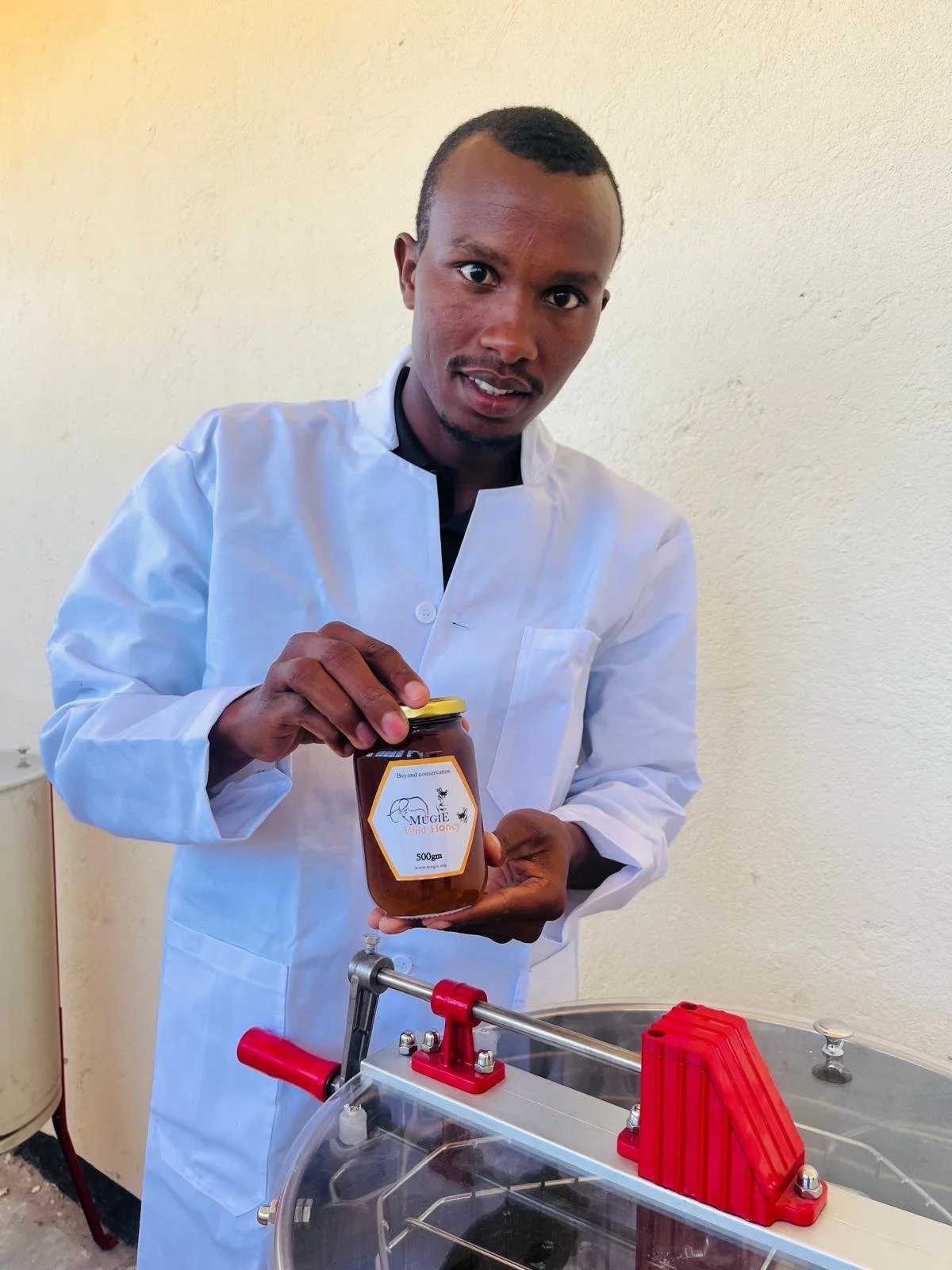
Each one tended, harvested and cared for by hands that know this land well. At the centre of it all stands Nyuki House (“Nyuki" is Swahili for "bee”), Mugie's honey processing facility, where the harvest is extracted, packaged and checked. Dozens of community members have already been trained in sustainable beekeeping and harvesting. Skills that turn into income and income that turns into choice: school fees paid, food on the table, a small business of one's own.
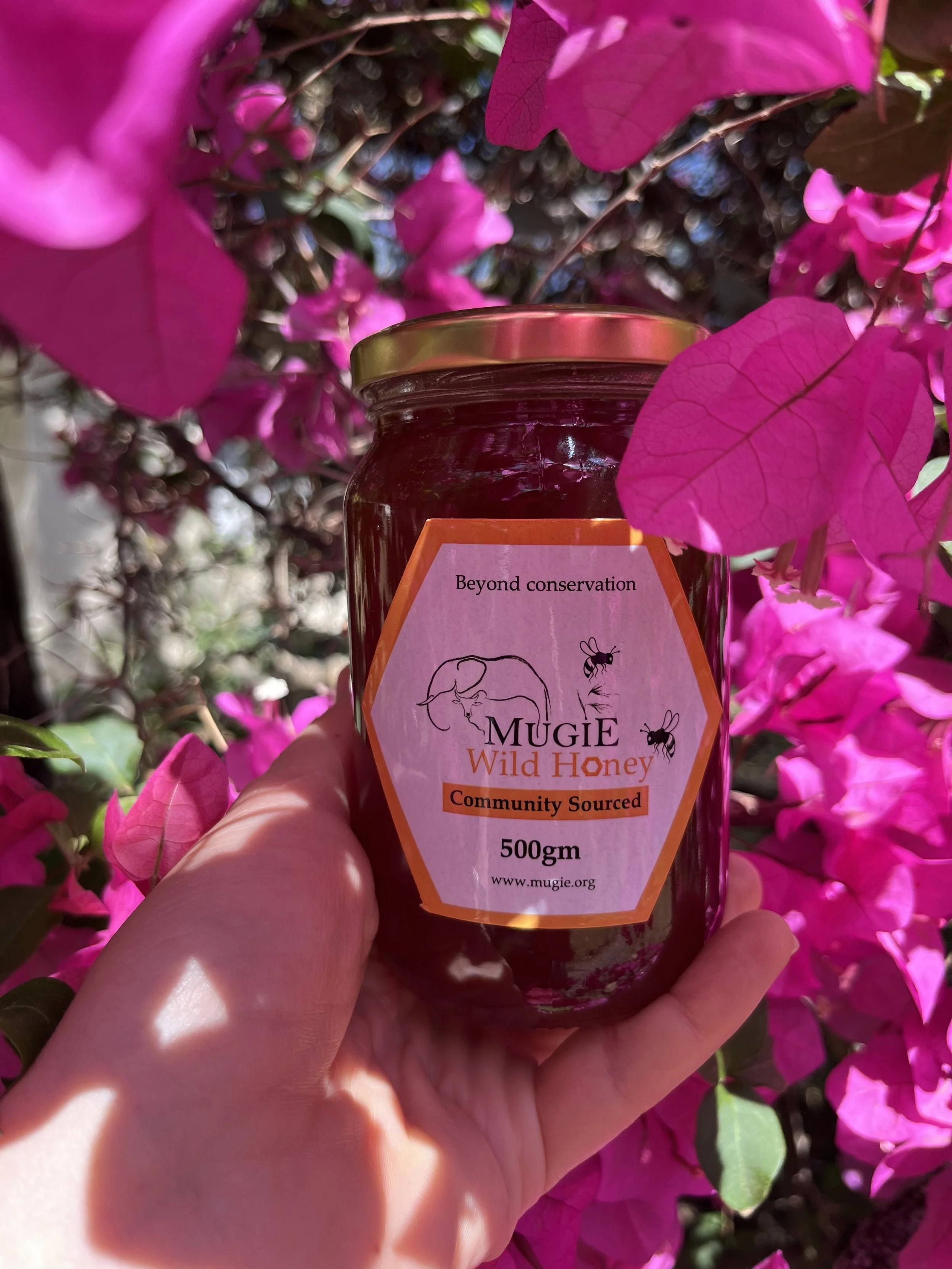
It hasn't been easy going. Weather can turn a good season bad overnight. Honey badgers: fearless, determined and famously not deterred by very much at all have a habit of finding their way into hives no matter how well they're hidden. And illegal harvesting, often done by smoking out a hive entirely, can undo months of careful work in an afternoon. Therefore every jar of Mugie honey represents not just good weather and healthy bees, but a fair amount of patience and protection along the way.
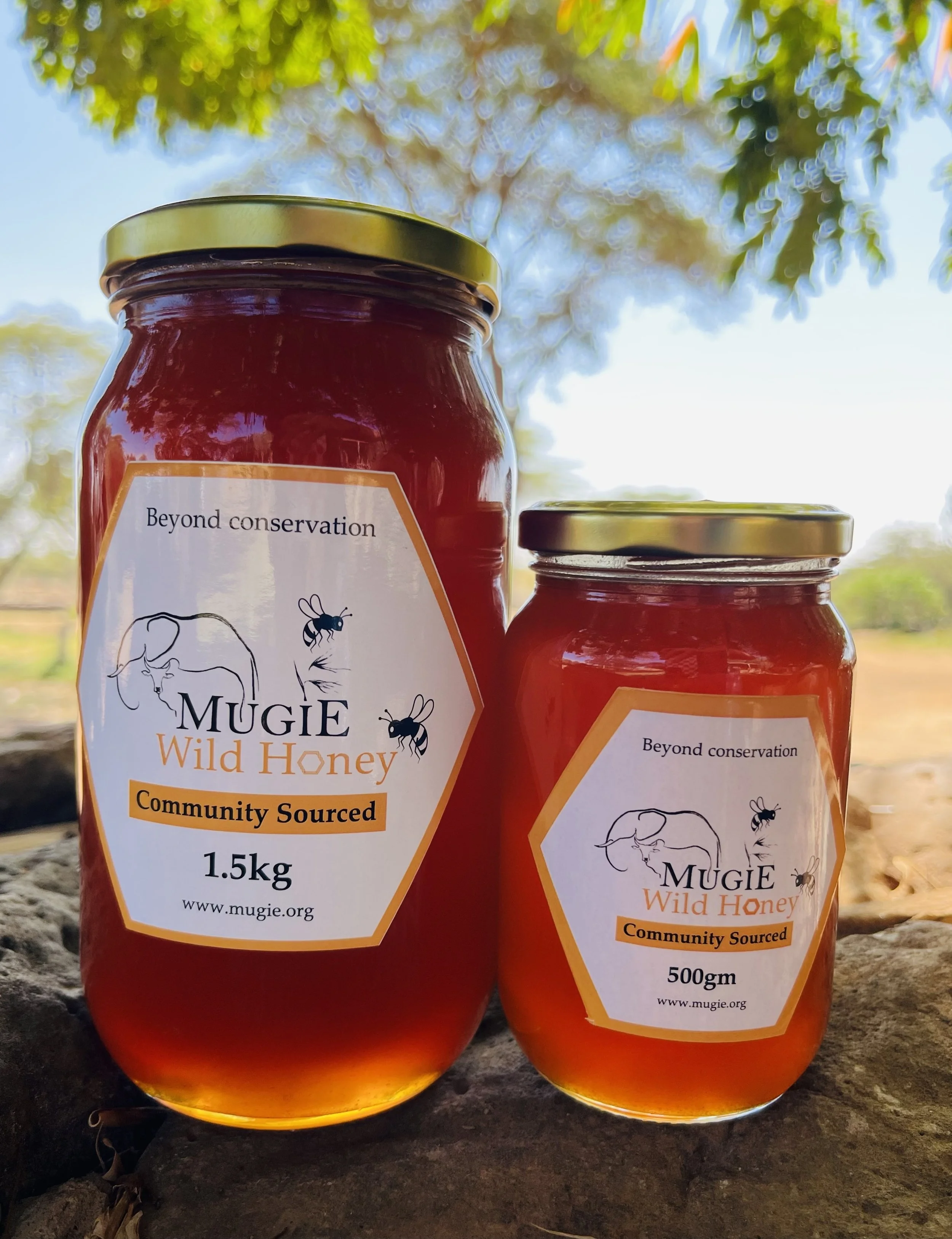
And here's something worth tasting for yourself: honey isn't just honey. Its flavour shifts with the seasons and the landscape. It’s shaped entirely by whatever flowers the bees have been visiting that month. Wild olive one harvest, acacia blossom the next; no two jars quite the same. You can taste that story for yourself as Mugie and community-sourced honey is available to buy at Mugie Conservancy.